

Feature
A daily check-in for couples
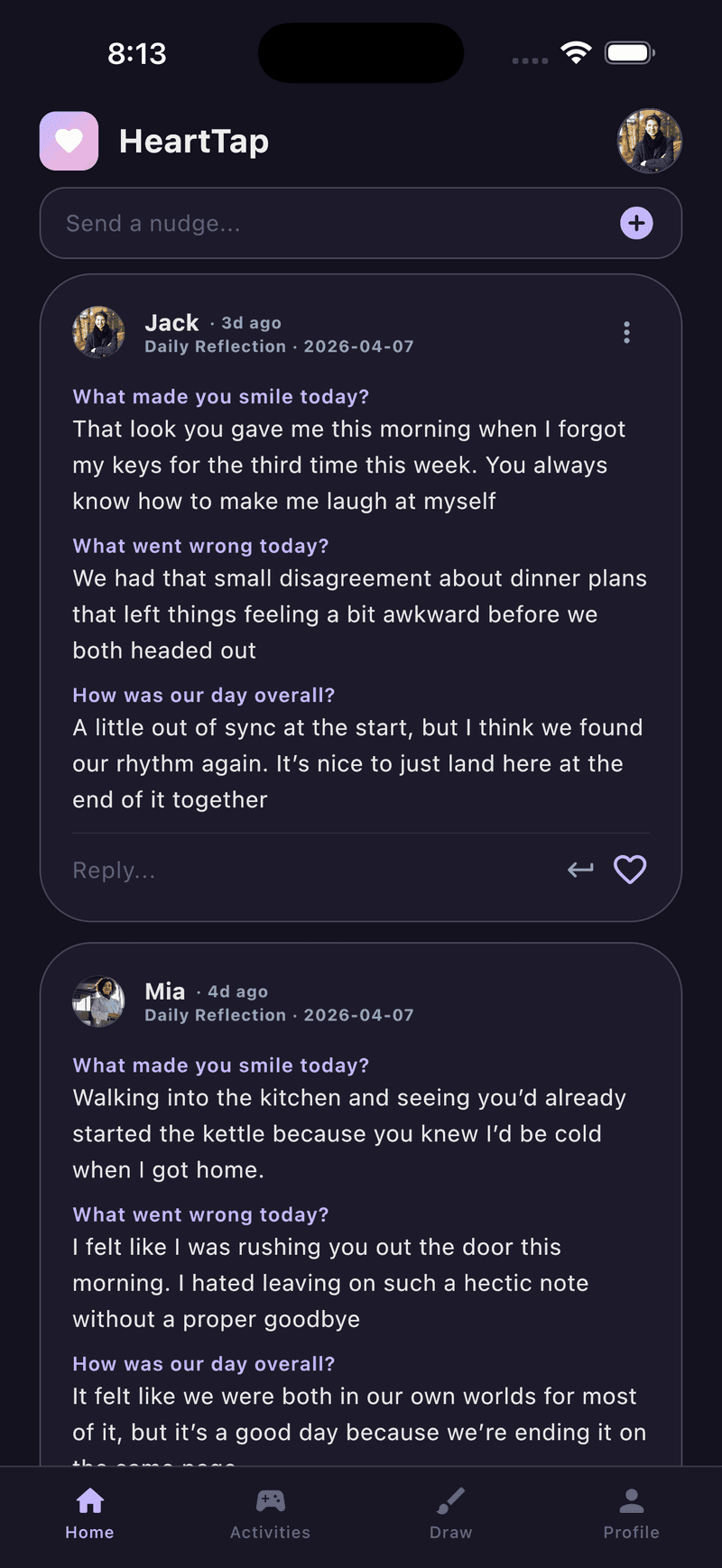
The daily reflection is three prompts: what made you smile today, what went wrong today, and how was the day overall. That is the whole thing. It takes about two minutes and both of your answers sit side by side afterwards.
It is deliberately small. Couples who set up an ambitious weekly relationship review abandon it within a month, because anything that requires both people to be free, willing and un-tired at the same time will eventually meet a week where none of those hold. Three prompts survives a bad week, and the point is to catch things while they are still small enough to mention casually.
Three prompts, every day
What made you smile, what went wrong, how the day was overall. Short enough to do while brushing your teeth and specific enough that "fine" is not an available answer.
Both answers, side by side
Your reflection and theirs appear together in the timeline, so you can see the day from the other side. Days where one of you had a great time and the other quietly did not are exactly what this catches.
It builds a record
Scroll back and you have an honest log of how the weeks actually went, which is considerably more accurate than either of you remembering. Patterns are much easier to see in writing than in recollection.
Replies and reactions
A check-in can be replied to. Reading that your partner’s day went badly and saying something about it is most of the value, and doing so the same evening beats finding out on Saturday.
Frequently asked questions
What are the daily check-in questions?
What made you smile today, what went wrong today, and how was our day overall. Three prompts, deliberately unchanged from day to day so that it becomes a habit rather than a task.
Do we have to do it at the same time?
No. Answer whenever suits you and the two responses sit together once both are in. Most couples do it in the evening, but nothing enforces that.
Is a daily check-in actually useful?
It catches the small things while they are still small. Most difficult conversations in a relationship are about something that could have been mentioned in one sentence weeks earlier and was not, because there was never quite a moment. A daily prompt is that moment.
What if the day was bad?
That is what the second prompt is for. The check-in is not there to produce a positive record; it is there to make the ordinary difficulties easy to say out loud on the day they happen rather than during an argument later.
Put them on your home screen tonight
Free to download on iPhone and Android. Link with your partner in under a minute, then send your first photo, drawing or check-in.